
Destination
Tengchong
The First Frontier City — Land of Volcanoes, Hot Springs, and Jade Hometown of Overseas Chinese
Tengchong is located in western Yunnan, about 650 kilometers from Kunming, and boasts 99 volcanoes and 88 hot springs. Visitors can climb the crater of Dakongshan Volcano in the Tengchong Volcanic Geopark or experience the geothermal wonder of the 'Big Boiling Pot' with water temperatures reaching up to 96.3°C in the Rehai Scenic Area.
In the early morning, when the first rays of sunlight pierce the clouds and mist of the Gaoligong Mountains and illuminate the Tengchong basin, you might begin to understand the vastness and wonder contained in the title "The First Frontier City." Located 650 kilometers from Kunming, a journey of nearly 10 hours by road, and just 70 kilometers further west lies Myanmar's Kachin State. This geographical remoteness has forged its unique character: beneath your feet lie 99 dormant volcanoes and 88 boiling hot springs, while all around are traces of the intermingling cultures of Central China, the frontier regions, and Southeast Asia. This is not a place that can be summed up simply as "beautiful." Its true essence is hidden in the scalding spring vents, the silent volcanic craters, and the yellowed pages of books in an ancient town's library.
Landscapes Tempered by Earth's Fire: From Volcanic Craters to Hot Spring Pools
The landscape of Tengchong is a gentle memory left behind by the earth's violent movements. If you look down from the air, you'll see a peculiar sight of "headless mountains"—their peaks are not sharp points but rather round or square depressions. This is the classic volcanic crater topography, vividly described by locals as "ten mountains, nine without heads."
Tengchong Volcanic Geopark is the starting point for understanding all of this. Park admission is 55 yuan, which includes entry to the Volcano Museum. The museum uses artifacts and models to clearly illustrate how volcanoes erupt and how lava cools to form columnar jointing. But the more direct experience is outdoors. You can hike along the trails to the craters of Dakongshan (Big Empty Mountain) or Heikongshan (Black Empty Mountain). Standing on the rim of these giant bowls, nearly 200 meters in diameter and 50 meters deep, with lush vegetation underfoot, it's hard to imagine that scorching magma once erupted from here. During the dry season from October to April of the following year, when the weather is clear, the park offers hot air balloon rides (approximately 200 yuan per person). The view of the connected volcanic cones from the air is the most breathtaking.
💡 **Tip**: The volcanic park is quite extensive, with electric shuttle buses available between sites (additional fee). If time is limited, focus on the Volcano Museum and climbing one crater. The Columnar Jointing and Heiyu River (Black Fish River) are in another direction and require extra time or a chartered vehicle to visit.
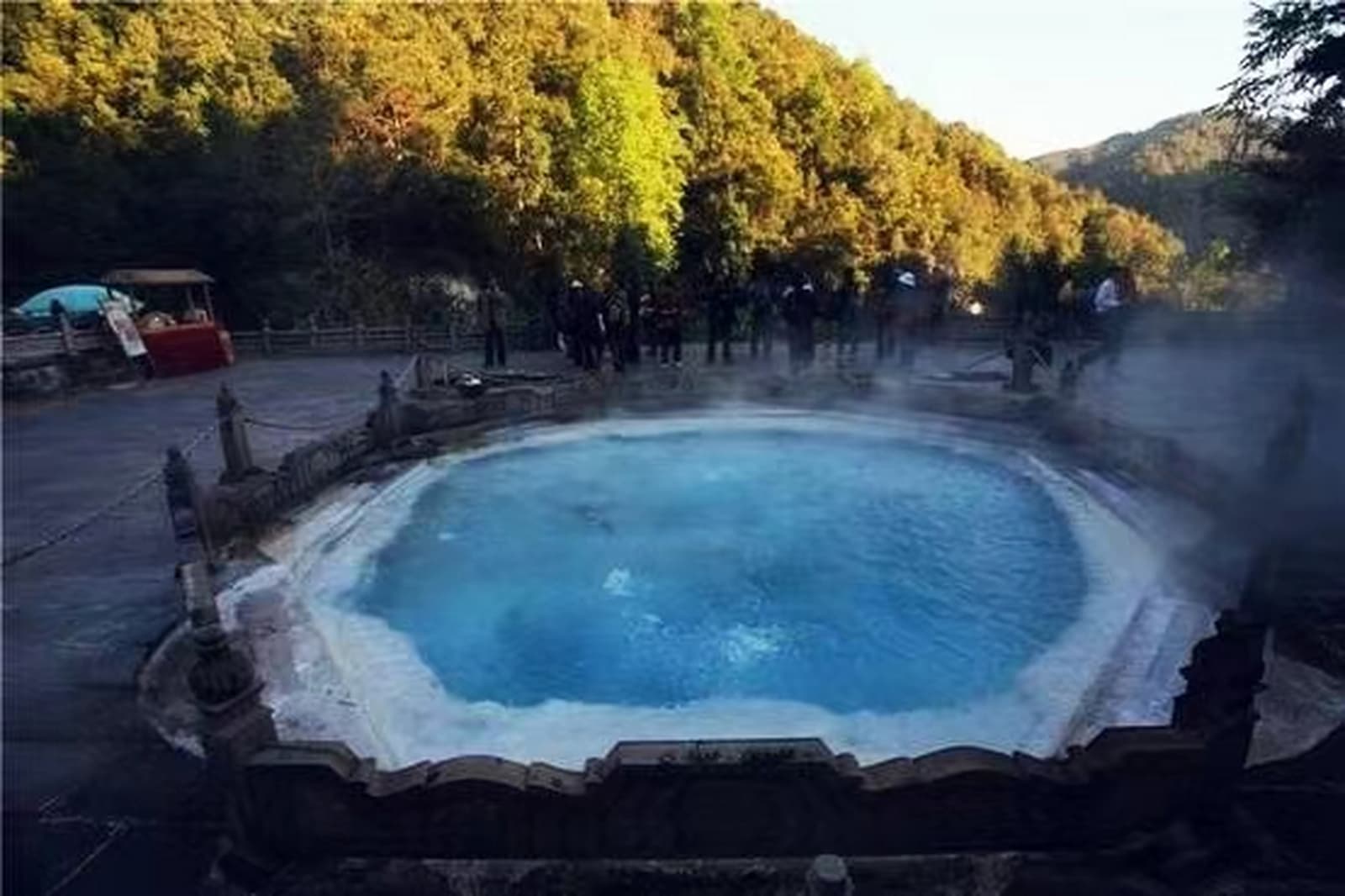
If volcanoes gave Tengchong its skeleton, geothermal activity gave it its blood and warmth. The Rehai (Hot Sea) Scenic Area is a concentrated display of geothermal activity, with an admission fee of 50 yuan. As soon as you enter the valley, you are enveloped by the scent of sulfur and rising plumes of steam. The most famous site, Dagunguo (The Big Boiling Pot), is a boiling spring with a diameter of 6 meters. Its water temperature remains at a constant 96.3°C, with steam billowing skyward—a spectacular sight. Locals often string eggs with straw ropes and place them over the steam vents; they cook in about 10 minutes, with the yolk solidifying and the white remaining tender and slightly runny—an experience not to be missed.
In Tengchong, soaking in a hot spring is not a luxurious indulgence but a philosophy of daily life, as integral as eating and drinking.
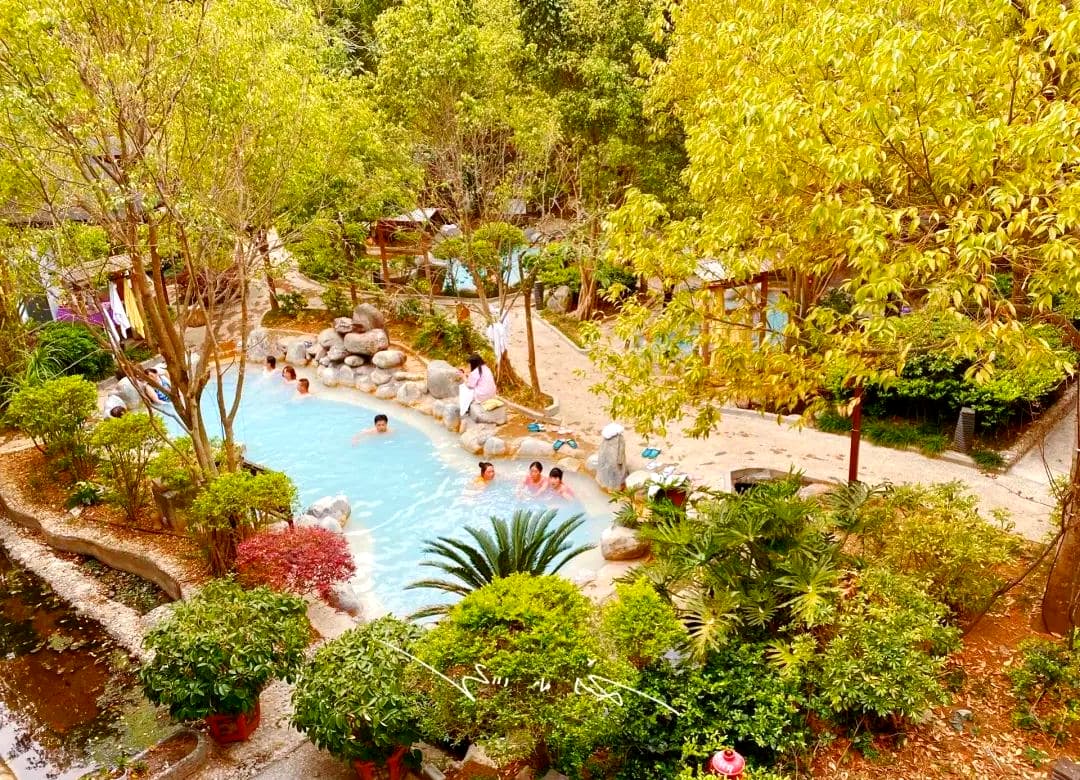
The scenic area's Yugu (Bath Valley) or Meinüchi (Beauty Pool) offer hot spring bathing (additional fee, starting around 300 yuan per person). However, I highly recommend staying at a hotel with a private in-room hot spring pool. In the evening, soaking in a private pool under the stars, feeling the mineral-rich water (containing sulfur, fluoride, silicon, and more) glide over your skin, smooths away the fatigue of the entire day. It's important to note that each hot spring soak should last 15-20 minutes; get out to rest and rehydrate promptly.
An Ancient Town Steeped in Time: Heshun's Library and Laundry Pavilions
If the volcanoes and hot springs are gifts from nature, then Heshun Ancient Town (admission 55 yuan) is a crystallization of human culture. It lies quietly atop a volcanic plateau, with a small river winding around the village. This is one of China's famous hometowns of overseas Chinese. Historically, men would "go to foreign lands" to trade in Myanmar and India, bringing back wealth and knowledge to build this "famous village of scholarship."
Upon entering the ancient town, the first impact might come from the Heshun Library. This, the largest rural library in China, was founded in 1928 and now houses over 70,000 volumes. Inside the Chinese-style gatehouse with its upturned eaves are quiet reading rooms and wooden bookshelves emitting a faint fragrance. It's remarkable to imagine that nearly a century ago, in this remote southwestern frontier, villagers here were already reading publications like *Shen Bao*, *Ta Kung Pao*, and books from overseas. It is not merely a tourist attraction but a cultural heart that still beats today.
The fabric of the ancient town is woven from countless cobblestone alleyways, flanked by Ming and Qing dynasty houses with whitewashed walls and dark tiles. The Former Residence of Ai Siqi showcases the life of this philosopher; Yuanlong Pavilion is a Taoist temple that harmoniously blends Confucianism, Buddhism, and Taoism, nestled against green hills and facing a deep pool—an excellent feng shui setting. But perhaps the most touching sights are the laundry pavilions scattered along the riverbanks. These were donated by overseas Chinese who ventured abroad in earlier times, built for the women of their hometown to provide shelter from wind and rain while washing clothes. These simple pavilions speak more eloquently than any mansion or ancestral hall of the deep-seated tradition among the overseas Chinese community of "remembering and caring for their homeland."
Season: September-November is the best time to visit Heshun, with clear autumn skies, mild weather, and soft light perfect for photography. Entering the ancient town before 7 AM or after 5 PM allows you to avoid tour groups and experience its most peaceful, authentic atmosphere.
The Palette of Four Seasons: Ginkgo, Wetlands, and Gaoligong Mountains
Tengchong's charm extends far beyond its core "Volcano-Hot Spring-Ancient Town" triangle. Its four seasons are like an ever-changing palette.
The Ginkgo Village in Autumn (Late October - Early December): This small village, originally named "Jiangdong Village," is famous for its over 3,000 ancient ginkgo trees. Every late autumn, the entire village is blanketed in golden leaves, with the ground, rooftops, and streams all glowing a brilliant yellow. The best viewing period is in mid to late November. As it gets very crowded, it's advisable to book a local homestay early to experience the golden fairy tale of the quiet morning.
The Changing Beihai Wetland: This is a wetland formed by a plateau volcanic barrier lake, situated at an altitude of 1,731 meters. Remarkably, it features "floating mat" type grass rafts that gently sway when you stand on them. During the high-water season from May to October, it becomes a lake where you can take a wooden boat or bamboo raft (approx. 50 RMB) through the meadows. In winter, as the water recedes, it transforms into vast golden grasslands. It's a wintering ground for many migratory birds, so bringing binoculars might lead to delightful surprises.
The Border and Wilderness: For travelers with ample time, consider spending a day at the Houqiao Port to experience the vibrancy of border trade (ID required). Alternatively, dedicate a full day to exploring a hiking trail in the Gaoligong Mountains. Known as the "World Species Gene Bank," this area boasts incredibly rich biodiversity and is perfect for nature lovers.
A Local's Guide to Itineraries, Food, and Accommodation
How to plan your Tengchong trip? Here is a flexible itinerary framework based on local experience, which you can adjust like building blocks.
Classic 3-Day Framework: Day one for the Volcano Geopark and Rehai Hot Springs, staying at a hot spring hotel in the evening. Day two immersed in the history of Heshun Ancient Town, visiting the solemn National Memorial Cemetery in the afternoon (free admission, closed on Mondays). Day three choose between Beihai Wetland and Ginkgo Village (seasonal) or Yunfeng Mountain.
In-Depth 5-Day Exploration: Based on the first three days, add a day for light hiking or birdwatching in the Gaoligong Mountains, and another day to visit the border port and Tengchong city's jade market (please consume rationally).
Where to Stay?
For the Hot Spring Enthusiast: With a sufficient budget, choose Angsana Tengchong Hot Spring Village or Rehai Yu Hot Spring Hotel for true "hot spring freedom."
For Cultural Immersion: Stay in a boutique inn within Heshun Ancient Town, priced around 300-600 RMB/night, where opening the window reveals the town's dawn and dusk.
For Budget and Practicality: Tengchong city center has well-established chain hotels, convenient as a transportation hub, though you'll need transport to reach various attractions.
What to Eat? Tengchong cuisine blends Han, Dai, Yi, and other ethnic flavors, simple yet vibrant.
Dajiujia (The Emperor's Savior): Stir-fried rice cakes (饵块). Legend says it once saved a fleeing emperor. Full of wok hei (breath of the wok).
Tuguazi (Earthen Pot Stew): A "Volcanic Hot Sea" slowly simmered in a clay pot, with ingredients layered. A grand dish for feasts.
Xidoufen (Pea Paste): The breakfast champion. A paste made from ground peas, topped with chili oil, coriander, and over a dozen other condiments, paired with a fried dough stick. It's how locals start their day.
Ganmarou (Caravan Meat): Large chunks of pork, cured then fried or stewed. Robust and hearty, it was the staple food for ancient horse caravans.
⚠️ **Pre-Trip Notes**: Tengchong's altitude is approximately **1,640 meters**. Altitude sickness is generally not an issue, but the temperature difference between day and night is significant. Even in summer, bring a jacket. **June to August** is the rainy season, so remember an umbrella, though hot springs after rain have a unique charm. Avoid hot springs on an empty or overly full stomach. Those with heart conditions or high blood pressure should exercise caution.
| Month | Climate & Scenery | Travel Highlights | Notes |
|---|---|---|---|
| Mar-May | Spring, mild climate, azaleas bloom | Nature awakens, ideal for outdoor hiking | Weather can change; bring a jacket |
| Jun-Aug | Summer, rainy, humid | Comfortable hot spring experience, lushest greenery | Prepare rain gear, mind the humidity |
| Sep-Nov | Autumn, clear skies, many sunny days | Golden season for photography, golden ginkgo (Nov) | Peak tourist season; book in advance |
| Dec-Feb | Winter, dry, cold mornings/evenings | Best time to warm up in hot springs, fewer tourists | Keep warm; some mountainous areas can be very cold |
Finally, as you conclude your journey, you might take home a piece of warm, smooth Tengchong jade (please purchase from reputable stores and request a certificate) or a stack of soft, resilient "Tengxuan" paper as a souvenir. But what you'll truly carry away is perhaps the skin-deep memory of the spring water's warmth, the tranquility of afternoon sunlight filtering through a courtyard in the ancient town, and the awe of feeling so close to the Earth's pulse while gazing into the distance from a volcanic crater. Tengchong is simply there, not loud, yet speaking volumes.
Highlights

Soak in Volcanic Hot Springs
Experience steaming eggs in the 96°C 'Big Boiling Pot' steam at Rehai Scenic Area, and stay in hotels with private hot spring access for a starlit bath

Explore Heshun Ancient Town
Stroll through the flagstone lanes of this hometown of overseas Chinese, and visit China's largest rural library — the Heshun Library

Visit the Ginkgo Village
Walk into Jiangdong Village in late autumn to see over 3,000 ancient ginkgo trees turn a brilliant golden yellow
Gallery

腾冲热海_011.jpg

腾冲热海_013.png

腾冲热海_015.jpg

Tengchong

Tengchong
Tengchong

Tengchong

Tengchong

Tengchong
Share this page
Tailor-Made
Design Your Perfect Trip
Tell us your interests, dates, and group size. Our local experts will craft a personalized itinerary just for you.
Design Your Trip