
Destination
Shangri-La
Hidden Land of Tibet — Snow-Capped Mountains, Sacred Lakes, and Songzanlin Monastery
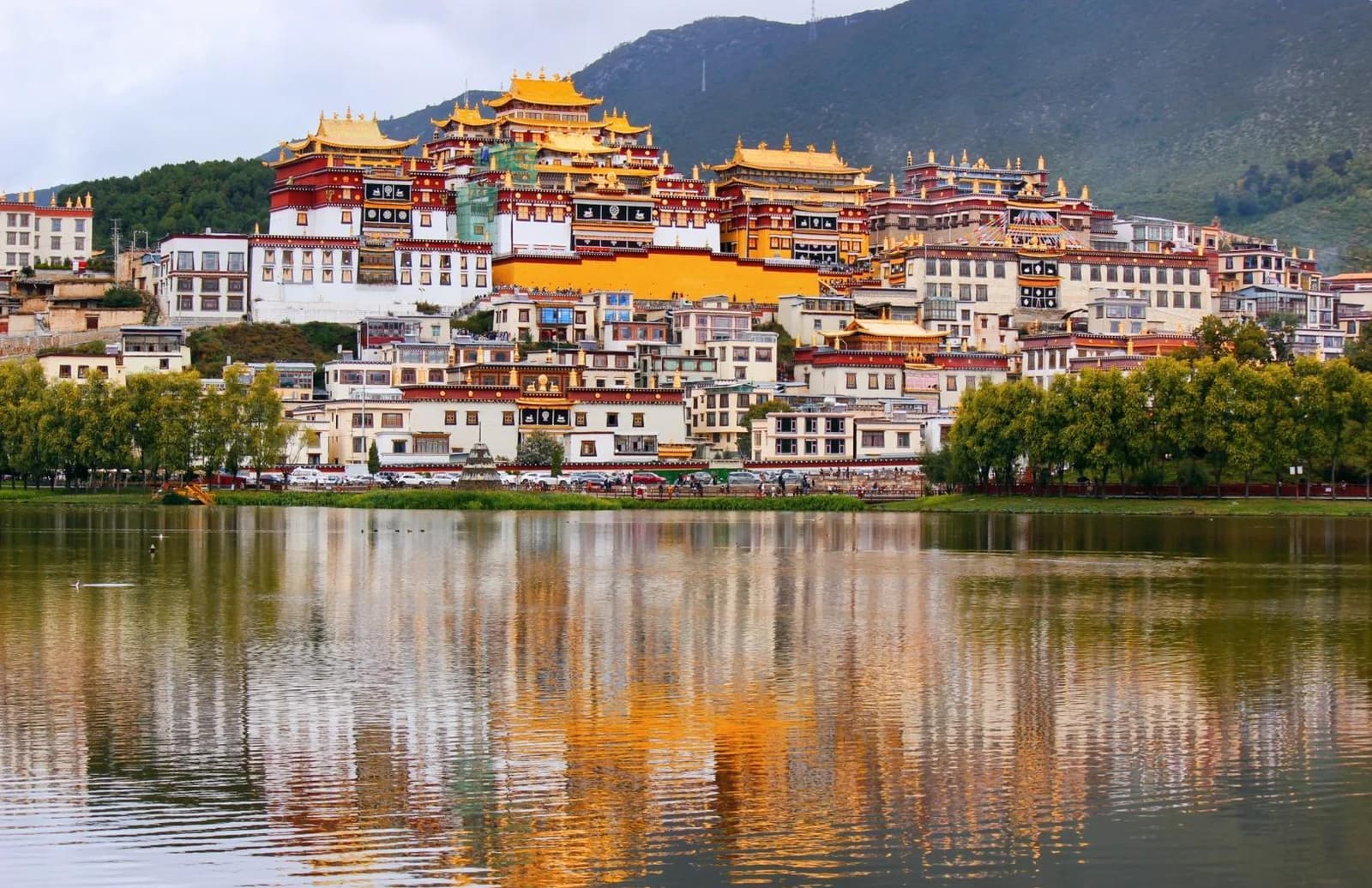
Shangri-La is located on the eastern edge of the Qinghai-Tibet Plateau at an altitude of 3,300 meters. In the early morning, the golden roof of Songzanlin Monastery and its reflection in the Lamuyangcuo Lake create a serene picture. This Gelugpa monastery, founded in 1679, is home to seven hundred monks. In Pudacuo National Park, a 4-kilometer-long boardwalk leads to the fir forest by Shudu Lake. The ancient town of Dukezong was rebuilt after a major fire in 2014, and a 21-meter-high prayer wheel still stands in Moonlight Square.
At half past six in the morning, when the first rays of sunlight crest the eastern ridge and strike the golden roofs of Songzanlin Monastery, the entire valley seems to ignite. The air is crisp, carrying a mingled scent of pine and juniper incense. Standing by the Lamuyangcuo Lake in front of the monastery, you watch the massive complex known as the "Little Potala Palace," along with the morning chanting of its seven hundred monks, perfectly mirrored in the glassy water of the lake—this is Shangri-La, at an altitude of 3,300 meters, offering you its first, and most serene, greeting.
This is not the typical face of Yunnan. While Xishuangbanna basks in the humid heat of its tropical rainforest and Dali's Erhai Lake is caressed by a lazy breeze, Shangri-La stands at the eastern edge of the Tibetan Plateau. It is a dramatic geographical and cultural uplift, a single step from the greenery of the subtropics into the vastness and grandeur of the snow-capped plateau.
Entering the Hall of Gods and Nature
The charm of Shangri-La lies half in its devout breath and half in its unadorned visage.
Songzanlin Monastery is the heart of the former. This Gelugpa monastery, founded in 1679, is far more than just a tourist attraction. Ascending the steep steps, each stride takes you further from the clamor of the world. Inside the dimly lit main hall, Zhacang Hall, the warm scent of butter lamps fills the air, and massive sutra pillars reach towards the ceiling. If you're fortunate, you might witness monks engaged in lively debate in the courtyard, their clapping and intellectual exchanges—a vibrant display of life—more awe-inspiring than any static statue.
**Don't Just Photograph the Golden Roofs**: Try circling to the hillside west of the monastery after 4 PM. The setting sun bathes the entire complex in a warm, deep, coppery gold, different from the morning light—a golden hour for photography.
Meanwhile, Potatso National Park is a silent exhibition of nature's power. As China's first national park to meet IUCN standards, its beauty lies in its "completeness." By Shudu Lake, straight fir trees stand like sentinels. Between May and June, the forest floor blooms with various species of alpine azaleas. Strolling along the nearly 4-kilometer-long wooden boardwalk, you might unexpectedly encounter a yak grazing on moss. It may glance at you before returning to its breakfast. Bitahai Lake feels even more secluded. Legend has it that around the Dragon Boat Festival each year, azalea petals fall into the water, are mistakenly eaten by fish, and the intoxicated fish float to the surface, creating a peculiar spectacle.
In Potatso, the best way to explore is to "slow down." Hiking on the plateau is not a race, but a reconciliation with your own breathing rhythm.
Ancient Town, Wetlands, and Hidden Canyons
Returning from nature's sanctuary to the world of mortals, Dukezong Ancient Town is the place to settle. The great fire of 2014 nearly consumed it, but the stone foundations and people's memories could not be burned away. The rebuilt old town still winds with cobblestone paths, lined with Tibetan-style wooden shop-houses. On Moonlight Square, the giant prayer wheel, standing 21 meters tall and weighing 60 tons, requires over a dozen people to turn it together. When you grasp the cowhide rope and push it clockwise alongside fellow travelers, the brass bells chime—a moment of connection that transcends language.
The surroundings of Shangri-La hide even more dynamic landscapes. Napahai Lake and Yila Grassland are essentially one entity—a shimmering lake in summer that recedes to become a vast golden meadow in winter. This seasonal wetland is also home to the black-necked crane. From November to March each year, these elegant birds migrate from the north, dancing in the morning mist. For about 150 yuan, you can rent a horse and be led slowly into the heart of the grassland by a local herder—an experience far more profound than taking photos from a roadside viewpoint.
But for the ultimate visual震撼, drive about 80 kilometers northwest to Balagezong Grand Canyon. This was once a missing corner on the map until the road was built in 2007. The canyon boasts a vertical drop of nearly 3,000 meters, with the Lancang River winding like a thin thread at its base. You can step onto the suspended glass walkway, facing the dizzying abyss beneath your feet, or transfer to the park's eco-friendly bus, winding your way up to the Natural Buddhist Pagoda Viewing Platform at 4,250 meters above sea level. Most moving is the isolated Bala Village atop the mountain, where a few Tibetan families still live, facing snow-capped peaks with their backs to the cliffs—time flows here at a different density.
When to Go and How to Get There
Shangri-La's seasons each have their own distinct character.
| Month | Weather & Scenery | Travel Experience | Notes |
|---|---|---|---|
| May-June | Late spring to early summer. Grasslands turn fresh green, with alpine rhododendrons blooming across the hills. | The most colorful season, full of vitality. | Large temperature difference between day and night; bring a windproof jacket. |
| July-August | Rainy season with changeable weather, but also when the grasslands are at their lushest. | Peak greenery, but rain gear is essential. | Afternoon showers are common; occasional road landslides possible. |
| September-November | Autumn. The sky is crystal clear, grasslands turn golden, and forests are painted in vibrant hues. | Best Season: Sep-Nov High visibility and stable climate. | Temperatures drop significantly after late October; winter clothing needed. |
| December-April | Winter. Dry and cold, often with snow, yet sunlight is abundant. | Fewer tourists; chance to see black-necked cranes; serene snowscapes. | Some scenic areas (e.g., Pudacuo) may have limited access; check in advance. |
There are two main ways to reach this highland paradise:
Direct Flight: Diqing Shangri-La Airport (DIG) offers flights to and from major cities like Kunming, Chengdu, Chongqing, and Lhasa. It's about a 15-minute drive from the airport to Dukezong Ancient Town, making it the fastest option.
Overland Journey: From Lijiang, hire a car or take a bus (approx. 4.5 hours). The route itself is scenic—you'll pass through the famously rugged Tiger Leaping Gorge, ascend along the Jinsha River Valley, and witness dramatic vertical changes in landscape and vegetation. This journey serves as an excellent acclimatization process for the high altitude.
Walking with Ease on the Plateau
Finally, altitude must be taken seriously. 3,300 meters is no joke—the oxygen level here is only about 70% of that at sea level.
Gradual Acclimatization: It's highly recommended to spend 1-2 days in Lijiang (2,400m) to adjust before heading to Shangri-La.
First-Day Precautions: On arrival, avoid bathing, drinking alcohol, and any strenuous exercise. Walk slowly and let your body find its own rhythm.
Proactive Measures: Drink plenty of warm water, use a humidifier in your room (winters are extremely dry), and eat light meals. If you experience headaches or palpitations, portable oxygen canisters are available, but avoid over-reliance. Most people's mild discomfort subsides within 1-2 days.
Respect Local Customs: Turn prayer wheels clockwise; walk around temples and stupas in a clockwise direction. Do not take close-up photos of monks or locals without permission. Remove hats and speak softly when entering temple halls.
Shangri-La, a name derived from James Hilton's novel Lost Horizon, means "the sun and moon in one's heart." Standing on the vast grasslands, watching prayer flags flutter in the wind with majestic snow-capped mountains in the distance, you'll understand—it's not just a place, but a state of being. A state where the world feels expansive and the heart finds peace. Here, what you seek may not be a specific sight, but that moment under the highland sun where your breath slows and you simply exist, peacefully.
Highlights

Worship at Songzanlin Monastery
In the early morning by Lamuyangcuo Lake, watch the reflection of the golden roof and listen to the morning prayers of seven hundred monks.

Stroll the Pudacuo Boardwalk
Hike through the fir forest by Shudu Lake, where you might unexpectedly encounter yaks grazing on moss.

Turn the Giant Prayer Wheel
Join others in pushing the 21-meter-high prayer wheel in Moonlight Square in the ancient town of Dukezong.

Horseback Riding through Napahai
In winter on the golden Yila Grassland, rent a horse for 150 yuan and be led by a herder to search for black-necked cranes.

Explore Balagezong
Walk the glass walkway over the canyon, or take a vehicle to an altitude of 4,250 meters for a bird's-eye view of the Lancang River like a thread.

Taste Tibetan Cuisine
In a traditional Tibetan wooden house, enjoy a bowl of butter tea, paired with tsampa and air-dried yak meat.
Gallery

Shangri-La

Shangri-La

Shangri-La

Shangri-La

Shangri-La

Shangri-La

Shangri-La

Shangri-La

Shangri-La

Shangri-La

Shangri-La

Shangri-La
Tours Here


Share this page
Tailor-Made
Design Your Perfect Trip
Tell us your interests, dates, and group size. Our local experts will craft a personalized itinerary just for you.
Design Your Trip